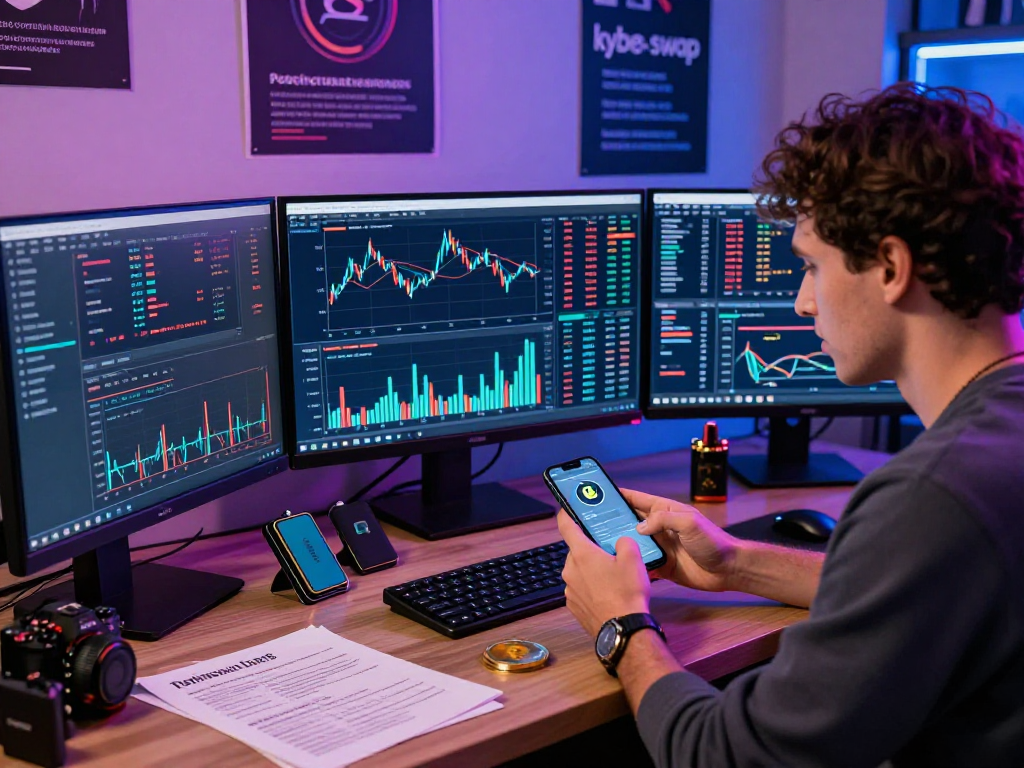
Understanding kyber-swap and Its Role in DeFi
In the evolving world of decentralized finance (DeFi), kyber-swap stands out as a powerful and efficient tool for cryptocurrency trading and liquidity provision. This decentralized exchange (DEX) revolutionizes how users can swap digital assets by leveraging an innovative aggregation engine that seeks the best market rates across multiple blockchains. With a commitment to ensuring users retain complete control of their funds and a focus on transparency, kyber-swap exemplifies core principles of DeFi that appeal to both novice traders and seasoned investors.
What is kyber-swap?
Kyber-swap is a decentralized, non-custodial cryptocurrency exchange and liquidity aggregator developed by Kyber Network. The platform allows users to convert a wide variety of digital assets securely and efficiently while maintaining full control over their funds. Unlike traditional exchanges, which often require users to deposit their assets into a centralized system, kyber-swap operates entirely through smart contracts. This means that transactions are executed directly on the blockchain, minimizing the risks associated with custodianship.
How kyber-swap Works: Core Mechanics
The unique architecture of kyber-swap combines its own liquidity pools with an aggregation engine that sources liquidity from various external platforms. When a user initiates a trade, kyber-swap intelligently routes the request to find the optimal price across all available liquidity sources. This not only ensures the best possible trade rate but also minimizes slippage, making it an attractive option for traders looking to maximize their returns. The use of automated smart contracts allows for rapid execution, often completing trades in a matter of seconds.
The Importance of Decentralization in Trading
Decentralization is fundamental to kyber-swap’s design and operational ethos. By enabling users to trade and exchange assets without the need for intermediaries, the platform promotes user sovereignty—ensuring that traders maintain control over their private keys at all times. In an age where centralized exchanges have faced numerous security breaches and regulatory challenges, kyber-swap offers a resilient alternative that prioritizes the safety and autonomy of its users.
Key Features of kyber-swap You Need to Know
Understanding the key features of kyber-swap is essential for users looking to maximize their trading efficiency and liquidity provision strategies. The platform’s unique offerings enhance both the trading experience and the potential for users to earn rewards.
Best-Rate Aggregation Explained
One of the standout features of kyber-swap is its best-rate aggregation capability. When a user requests a swap, the aggregation engine simultaneously evaluates multiple liquidity venues to find the most favorable price available. This ability to compare rates across numerous platforms allows kyber-swap to frequently provide better rates than exchanges relying solely on their internal liquidity pools. This aggregation method ensures that even larger trades can be executed without significant price impact, preserving the value of the assets being traded.
Dynamic Market Maker Model: How It Works
Kyber-swap employs a dynamic market maker (DMM) model, which adapts trading fees based on market conditions. This contrasts with traditional automated market makers (AMMs) that utilize static pricing. With the DMM, fees can fluctuate in response to market volatility, encouraging liquidity provision during favorable trading conditions while ensuring liquidity providers are adequately compensated during times of high demand. This flexibility enhances the platform’s capital efficiency and overall liquidity.
Cross-Chain Swaps: Enhancing Trading Efficiency
In a multi-chain environment, the ability to execute cross-chain swaps represents a significant advancement in decentralized trading. Kyber-swap enables users to exchange tokens across various Ethereum Virtual Machine (EVM) compatible blockchains seamlessly. This functionality eliminates the complexity often associated with moving assets between networks, as the process is streamlined to feel like a single transaction. As the DeFi landscape continues to diversify, kyber-swap’s cross-chain capabilities position it as a versatile tool for users looking to engage with multiple networks.
Liquidity Provision on kyber-swap: Strategies and Benefits
Providing liquidity on kyber-swap can be a lucrative endeavor for users willing to participate in the decentralized trading ecosystem. Understanding how to effectively contribute liquidity can enhance returns and maximize benefits.
Understanding Liquidity Pools
Liquidity pools are fundamental to the operation of kyber-swap, as they facilitate trades by providing a reserve of tokens that can be exchanged. Users can contribute to liquidity pools by depositing pairs of tokens, which are then utilized in trades conducted on the platform. In exchange for their contributions, liquidity providers earn fees generated from trades, creating a passive income stream. The enhanced capital efficiency of kyber-swap’s pools allows providers to earn returns relative to their capital commitments.
Yield Farming Opportunities for Providers
In addition to earning trading fees, liquidity providers on kyber-swap can engage in yield farming—a practice that allows them to stake their assets and earn additional rewards. This mechanism incentivizes users to provide liquidity, as it not only increases potential earnings but can also help to stabilize the liquidity pools. As the demand for token swaps increases, providing liquidity during high-traffic periods further enhances opportunities for profit.
Impermanent Loss: Risks and Mitigation Strategies
While liquidity provision offers numerous benefits, it is essential to be aware of impermanent loss—the potential decrease in value due to fluctuations in the price ratio of the assets in a liquidity pool. This risk can be mitigated by selecting pools with correlated assets (such as stablecoin pairs) and by actively monitoring market conditions. Additionally, kyber-swap’s dynamic fee structure can help buffer against impermanent loss during volatile market periods, ensuring that liquidity providers are compensated adequately when market conditions change.
The Governance Mechanism of kyber-swap: A Deep Dive
Governance in decentralized finance is critical for ensuring that the development direction aligns with the community’s interests. Kyber-swap implements a robust governance mechanism centered around its native KNC token.
Role of KNC Token in Decision-Making
The Kyber Network Crystal (KNC) serves as the governance token within the kyber-swap ecosystem. Holders of KNC can participate in decision-making processes regarding protocol updates, liquidity incentives, and parameter adjustments. This empowers users to influence the evolution of kyber-swap actively, reinforcing the platform’s commitment to a decentralized governance model.
Participating in KyberDAO
KNC holders participate in KyberDAO, the decentralized autonomous organization that facilitates governance activities. By staking their KNC, holders can vote on proposals that directly shape the protocol’s future. This system encourages community engagement and ensures that the voice of the users is integral to the platform's development, promoting a sense of ownership and accountability.
Long-term Vision for Governance and User Engagement
The long-term vision for governance within kyber-swap is to foster a sustainable ecosystem that resists unilateral control while remaining responsive to user needs. By enabling KNC holders to participate meaningfully in governance, kyber-swap creates a collaborative environment where the community collectively steers the platform's evolution, enhancing functionality and responsiveness to market demands.
Future Trends for kyber-swap and Decentralized Exchanges
As the DeFi landscape continues to evolve, kyber-swap remains at the forefront of emerging trends and technologies that shape how decentralized exchanges operate. Understanding these trends is essential for users looking to leverage platforms like kyber-swap effectively.
Emerging Technologies and Their Impact
Technological advancements, such as improved blockchain scalability solutions and innovative layer-two frameworks, are set to enhance the functionality of decentralized exchanges. Kyber-swap’s multi-chain capabilities place it in a prime position to capitalize on these developments. Integrating advanced technologies into its operations can lead to faster trades, lower fees, and improved overall user experiences.
Market Predictions for 2026 and Beyond
Looking ahead to 2026, the demand for decentralized trading solutions is expected to increase significantly as users seek safer alternatives to centralized exchanges. The value proposition of kyber-swap, characterized by its commitment to user control and decentralized operations, aligns with the anticipated shift toward more inclusive financial systems. As liquidity fragmentation continues, kyber-swap’s aggregation capabilities will be invaluable for users navigating an increasingly complex landscape.
How to Stay Competitive in the Evolving DeFi Landscape
To remain competitive in the rapidly evolving DeFi landscape, kyber-swap must continually innovate and adapt. This includes enhancing user interfaces, expanding liquidity partnerships, and optimizing performance across various blockchain networks. Continued community engagement through governance initiatives will also ensure that kyber-swap stays aligned with user needs and market trends.